John King
Falling For The CEO: BAD BOY ROMANCEJohn King is William King’s father and the retired founder of the Grace hotel franchise. Although he remains largely outside the central romance between William King and Diana Jones, his family history gives that romance an important emotional background: William’s distrust of intimacy is connected not only to his failed marriage to Julia but also to the earlier rupture caused by his mother’s departure. John’s household, his care for his children, and his later relationship with Gloria offer a contrasting model of family life in which loss does not have to become permanent isolation.
Identity and Family Background
John is established through his place within the King family and through the business empire that William has inherited the responsibility of managing. William dislikes his father’s wealth and the social display associated with it, yet he also recognizes that glamorous events are integral to the hotel business. The welcoming event organized for William at the Grace Hotel in Cape Town is intended to keep the hotel in the media spotlight while he repairs troublesome operations, making John’s riches and business legacy an active pressure in William’s professional life rather than merely a background detail.
John’s family history is marked by an earlier marriage that ended under painful circumstances. He was married to Luna Jones, Connor Jones’s mother, when her increasingly erratic behavior began to affect their child. At first, John believed her highs and lows might be postnatal depression, but Luna eventually received a diagnosis of bipolar disorder, filed for divorce, and left Connor with John. The departure shaped the emotional conditions in which William grew up: Gloria later explains that John had to care for William while making certain that the child understood he was not responsible for his mother’s leaving. John therefore represents both the provider who held a family together and the father whose household was formed in response to abandonment.
Home and Domestic Presence
John’s home is presented as a place of established comfort and accumulated history. William still feels some distance from his father’s new life, admitting internally that it does not quite seem like a life of which he is fully a part. Even though he has a key and Gloria repeatedly tells him to use it, he rings the bell out of courtesy. That small ritual expresses the unresolved boundary between William as an adult son and William as someone who still feels like an outsider within his father’s remarried household.
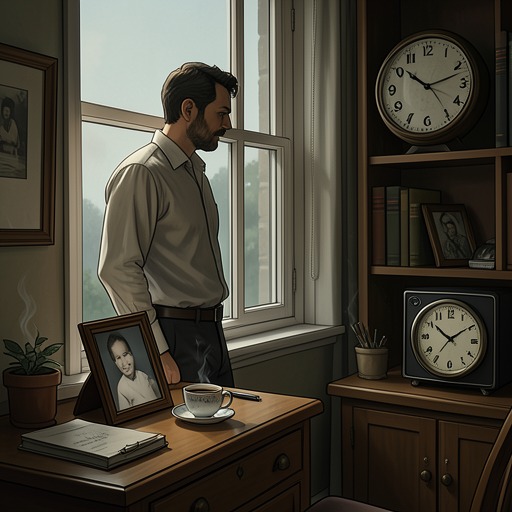
The house itself embodies John’s retirement and the life he has built after the demanding years of running the Grace hotel franchise. A brick structure with large green shutters, it includes a balcony that John added after retiring. William knows that his father spends hours there reading books he had postponed during his career. John had kept a written list of the books he wanted to read and eventually returned to them, proving William wrong in his assumption that the plan might never be fulfilled. The detail gives John a quiet discipline distinct from the public extravagance associated with his wealth: he is not only a businessman, but also a man reclaiming private time after years of obligation.
John’s connection with Tara King further reveals the warmth of the household. When William visits, Tara opens the gate through the intercom, and the familiar house quickly becomes a scene of sibling play. William catches her when she rushes into his arms, spins her around, and pulls at her hair in a way he knows she will dislike before she smiles again. John is not present in that moment, but the ease of the reunion suggests the family environment he has maintained for Tara and William: affectionate, secure enough for teasing, and capable of absorbing small conflicts without lasting resentment.
Meeting Diana Jones
Diana meets John when William brings her into the family kitchen and dining area. The room is enormous compared with Diana’s house, modern without being especially sophisticated, and connected to a garden that impresses her. John sits at the kitchen counter beside Gloria, and Diana immediately notices that his greyed hair and altered eyes nonetheless make him resemble William several decades later. The resemblance turns the introduction into more than a formal meeting: she is shown a possible future version of the man she is beginning to love.
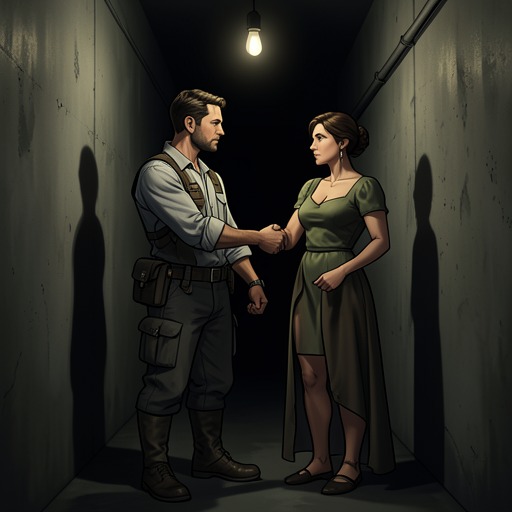
William greets John warmly, shaking his hand and tapping him on the back before introducing Diana. John offers his hand and identifies himself directly, while Diana responds by observing that she can see where William inherited his good looks. John’s chuckle keeps the exchange light, and Gloria’s welcoming manner eases the pressure Diana feels. Through this first encounter, John is associated with familial acceptance rather than interrogation. He does not challenge Diana’s presence or treat her as an intruder, helping the household become a space where William’s private identity can briefly coexist with his professional authority.
Influence on William’s Emotional Life
John’s most important influence is indirect. William’s past relationship with Julia left him wary of romantic commitment, especially after Julia became increasingly selfish and demanded a child as though it might repair their problems. William also feared reproducing the emotional indifference he had experienced between his parents. John’s history helps explain why William regards a childless or loveless union as preferable to bringing a child into a relationship poisoned by conflict, even though that judgment does not prevent him from mishandling intimacy with Diana.
Gloria’s later conversation with William makes John’s role explicit. She tells William that he had been deeply broken by his mother’s departure, perhaps even more than William himself understood, because he had been responsible for caring for his son while protecting him from the belief that he had caused the abandonment. When Gloria met him, John had nearly closed himself off from the possibility of love. Her account presents their relationship as a second chance made possible by persuasion and emotional risk. John is therefore a living precedent for the argument Gloria offers William: damage can be acknowledged without being allowed to dictate the rest of a person’s life.
This example matters because William initially treats his own pain as a permanent character flaw. Gloria says that he has convinced himself that his mother and Julia have tainted him so thoroughly that he can never have a healthy relationship. John’s life contradicts that conclusion. His experience of being left by Luna, his responsibility as a parent, and his later marriage to Gloria show that wounded family history need not produce lifelong emotional closure. John’s marriage does not erase the earlier loss; it demonstrates that a person can carry the history and still form a new bond.
Narrative Function and Significance
John functions as a stabilizing family presence and as part of the emotional architecture behind William’s transformation. He is connected to wealth, institutional authority, and the expectations attached to the Grace brand, but the scenes surrounding his home emphasize reading, retirement, parenting, and remarriage rather than business display. This contrast helps distinguish the public world William manages from the private model of persistence that his father’s life represents.
His significance also lies in the way his family history links several relationships across generations. Luna’s departure affects John, Connor Jones, and William; John’s care for his children shapes the household William enters as an adult; and his relationship with Gloria becomes evidence that love can follow abandonment. Through John, the novel places William King’s romantic crisis inside a wider family system rather than presenting it as an isolated failure between two individuals.
John does not resolve the conflict between William and Diana himself. Gloria is the person who confronts William and urges him to acknowledge the pain and wrongdoing he has avoided. Yet her advice depends on the example of her marriage to John. When William finally tells Diana that he married the wrong woman, recognizes how profoundly he loves her, and asks for the chance to prove that their future can belong to the two of them, his movement toward honesty echoes the possibility John’s life has already embodied. John’s lasting narrative importance is thus quiet but decisive: he represents the family history William fears repeating and the evidence that such a history can be transformed.